




Speed is a Body Sport – Lamborghini and Technogym in Zurich

Beatrice Lessi
Photos: © Manuel Schmid / Roadbook
I had no idea what to expect when Technogym invited me to their Zurich showroom for an evening about racing drivers and physical fitness. I went thinking it would be interesting. I came back slightly shaken — in the best possible way.
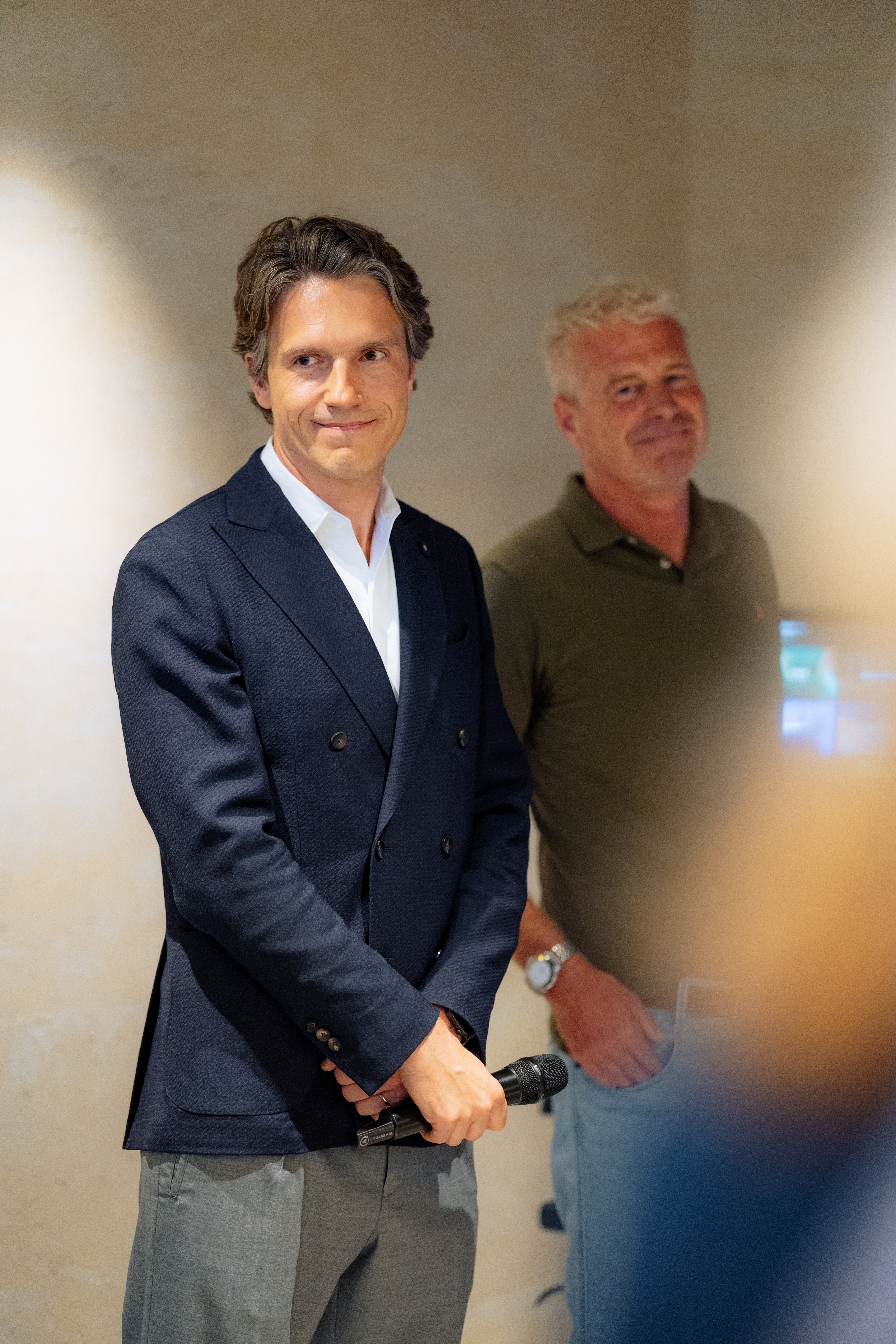
The guest was Miloš Pavlović, official Lamborghini Squadra Corse driver. Serbian, born in Belgrade and then realised in Italy after the age of 9, when he satarted karting . By 1996 he was the youngest winner in history of the CIK-FIA World Cup — the “Ayrton Senna Trophy” — beating, among others, a certain Jenson Button and a young Fernando Alonso. Formula 1 was within reach, then funding collapsed, then Lamborghini called, and the rest is a career that includes European and World Championship titles in the Super Trofeo. In 2025 he finished second overall in the standings by three points. Three.
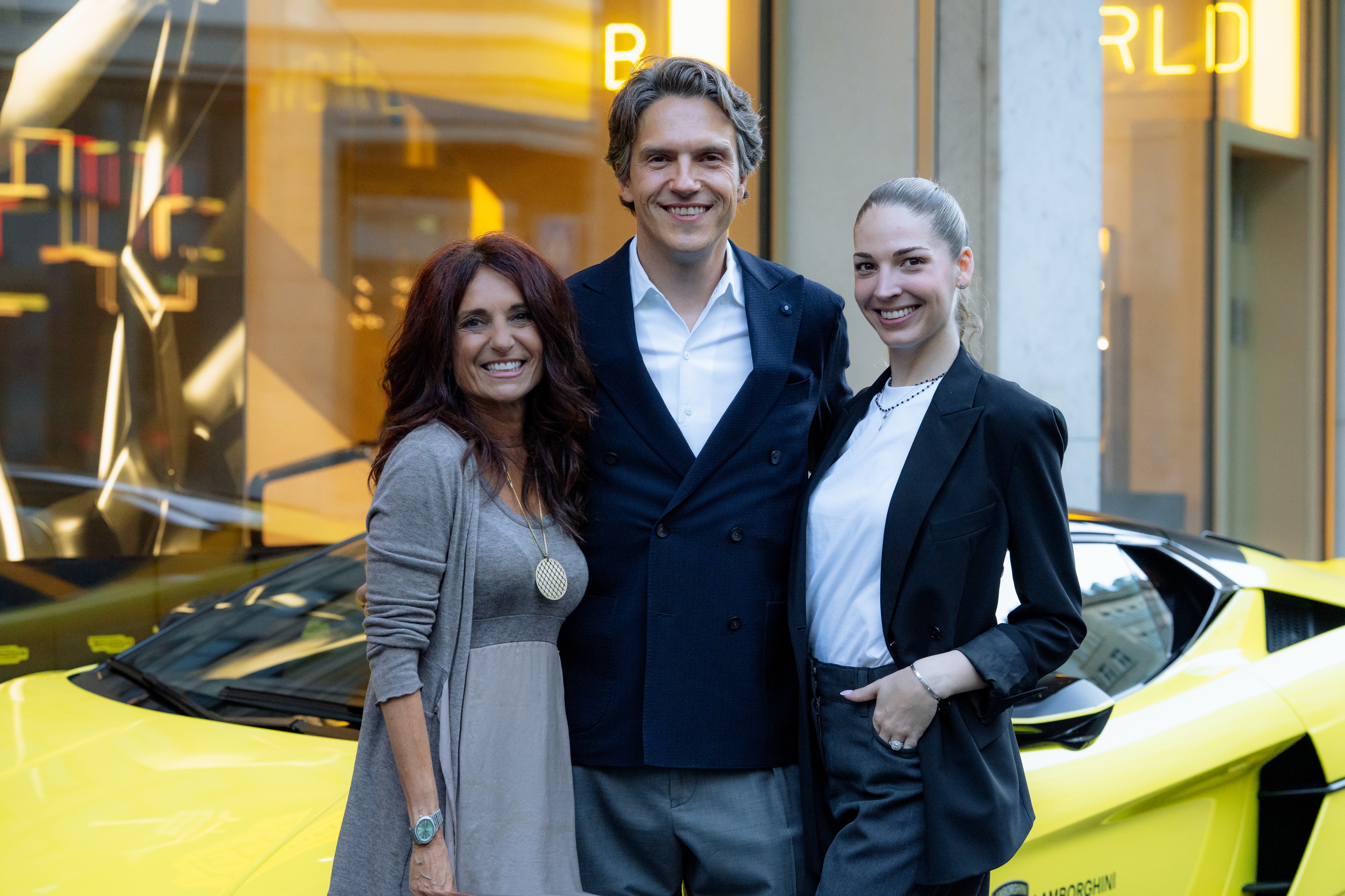
But I’m getting ahead of myself. When he walked in, I turned to the Italian woman next to me and said, in Italian, what any self-respecting Italian woman would say: “Ma quanto è bello.” It was his wife. She laughed, authorised me to ask for photos, and we had the best five minutes of the evening before the talk even started.
Then Miloš spoke, introduced by editor and car expert Jorge Guerreiro.
I had always vaguely assumed that race drivers were skilled, perhaps a little reckless, and mostly sitting down for a living. Wrong on all counts — especially the last one.
During a race, an F1 driver’s heart rate peaks between 180 and 210 beats per minute — and the average across the entire race duration sits around 170, higher than most other athletes, sustained for up to two hours straight. That is not a sprint. That is an ultra-endurance event inside a metal shell doing 300 km/h.
And the strapping in alone — the six-point harness, the suit, the heat — starts the stress response before the engine even fires. Drivers release twice as much adrenaline and noradrenaline per minute as an athlete at maximum effort on a bike ergometer. The cockpit is essentially a sauna: on average, F1 drivers lose two to three kilograms of water per race, rising to more than four in hot and humid conditions. Controlling your pulse while strapped into that is not a metaphor. It’s training. Serious, structured, daily cardio training.
Then there is the braking. An F1 driver exerts up to 180 kg of force on the brake pedal — with one leg, no power assistance, repeatedly, for the entire race. And the neck: through high-G corners, the combined weight of a driver’s head and helmet can exceed 40 kg acting on the neck muscles, which is why drivers train by strapping 30 kg weights around their heads and dangling them off a table to build resistance. Michael Schumacher used to train 8 Hours a day, to be able to stand this pressure.
Every extra kilogram on the car is the enemy of speed. So naturally, every extra kilogram on the driver is too. Nico Rosberg famously had the paint removed from his helmet to save grams. Grams. These are people for whom diet is engineering, not vanity.
At some point, Miloš said that he wished he had raced in the era of Senna. Less regulation, more raw driving, more of the man — not the machine — deciding the outcome. I don’t know enough about the technical regulations to have a view, but I know what it feels like to look at a sport from the outside and think the rules have tamed something that used to be wild.
Miloš finished second last season by three points. Three.
If the 2026 season has any justice in it, Miloš Pavlović will finish it on top.